
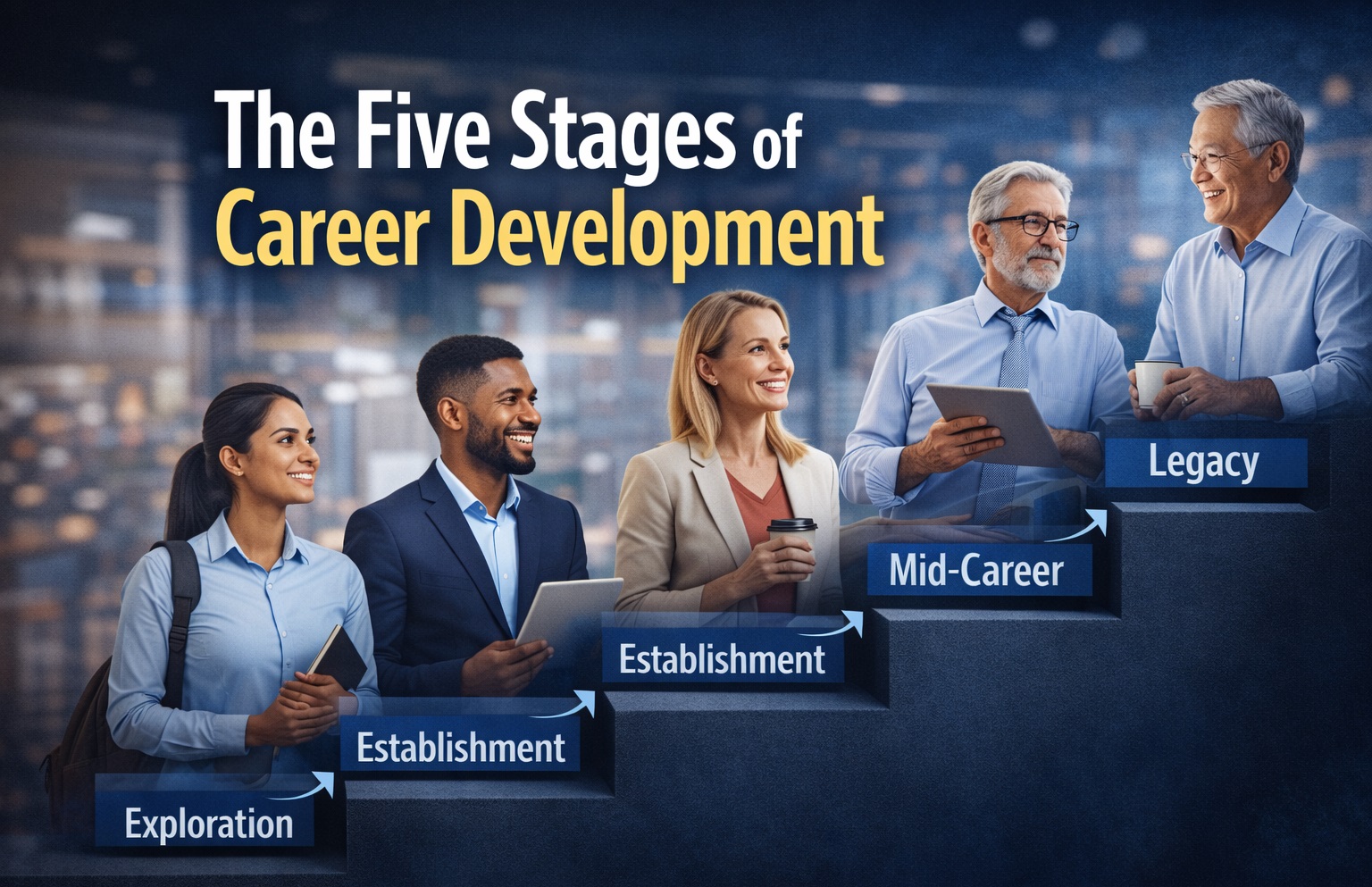
A professional career is not a straight line — it evolves through different phases, each with its own challenges, opportunities, and priorities. These phases are often referred to as the five stages of career development, also known as the career life cycle.
Understanding where you are in your career journey can help you make smarter decisions, set realistic goals, and prepare for what comes next. In this guide, we explore each of the five career stages and share practical tips to help you succeed at every step.
Typical age range: 21–25
The exploration stage usually begins before securing permanent employment. Many people at this stage are completing undergraduate or postgraduate studies while exploring career possibilities. You begin narrowing down options based on education, interests, upbringing, and guidance from mentors.
This is a time of discovery and experimentation, where expectations start to form around career direction, lifestyle, and income.
Key focus areas:
Discovering interests and career motivations
Developing basic skills and qualifications
Understanding workplace expectations
Tips for success:
Explore multiple career paths through internships, volunteering, part-time work, and job shadowing
Speak with lecturers, mentors, and career advisers about suitable training and qualifications
Use university or college career centres to build early professional networks
Typical age range: 25–35
The establishment stage marks the transition into the workforce. This is when you secure your first long-term role, take on entry-level or mid-level responsibilities, and begin building your professional identity.
It’s common to experience a mix of excitement and uncertainty as expectations meet the realities of work. Learning quickly, gaining trust, and developing competence are critical during this phase.
Key focus areas:
Learning your role and responsibilities
Building confidence and credibility
Developing and strengthening skills
Tips for success:
Invest in training, workshops, and continuous learning
Seek mentorship for guidance and career advice
Use performance reviews to identify strengths and improvement areas
Pursue relevant certifications or licences to enhance employability
Typical age range: 35–45
Mid-career is often characterised by stability, peak productivity, and increased responsibility. Many professionals reach senior or specialist positions during this stage. However, it can also be a time of reflection, especially if growth slows or job satisfaction declines.
Work-life balance becomes increasingly important, as personal and professional responsibilities grow.
Key focus areas:
Evaluating career satisfaction
Seeking progression or leadership opportunities
Considering career change or specialisation
Tips for success:
Have open conversations with managers about growth and development
Apply for internal promotions or stretch assignments
Explore external opportunities that better align with long-term goals
Typical age range: 45–55
In the late-career stage, professionals often rely more on experience and expertise than rapid skill acquisition. Many shift their focus from advancement to mentoring, leadership, and knowledge transfer.
While promotion opportunities may become less frequent, this stage offers a chance to shape teams, influence culture, and prepare for future transitions.
Key focus areas:
Mentoring and coaching others
Leveraging experience and reputation
Preparing for retirement
Tips for success:
Develop interests outside of work, including hobbies and community involvement
Seek financial and retirement planning advice
Share expertise through mentoring, speaking, or writing
Typical age range: 55–65
The legacy stage focuses on reflection, fulfilment, and transition. Many professionals move toward retirement, part-time work, or consultancy roles. This stage offers the freedom to pursue passions, give back to the community, and support the next generation.
Key focus areas:
Reflecting on career achievements
Passing on knowledge and experience
Exploring new interests and lifestyles
Tips for success:
Stay mentally and socially active through learning and hobbies
Maintain strong connections with friends, family, and professional networks
Share expertise through teaching, volunteering, or advisory roles
Every career stage comes with its own challenges and rewards. By recognising where you are in your professional journey, you can make informed decisions, prepare for transitions, and find satisfaction at every phase of your career.
Careers are not just about progression — they are about growth, balance, and legacy.
